Research, education, and fellowship
Dr. Richmon’s research aims to cure head and neck cancer with less disruption to patients’ lives: smaller operations, faster recovery, better swallowing and speech, and smarter use of radiation and chemotherapy. He has published more than 150 peer-reviewed papers. Just as important to him is training the surgeons who will carry this work forward.
Areas of research
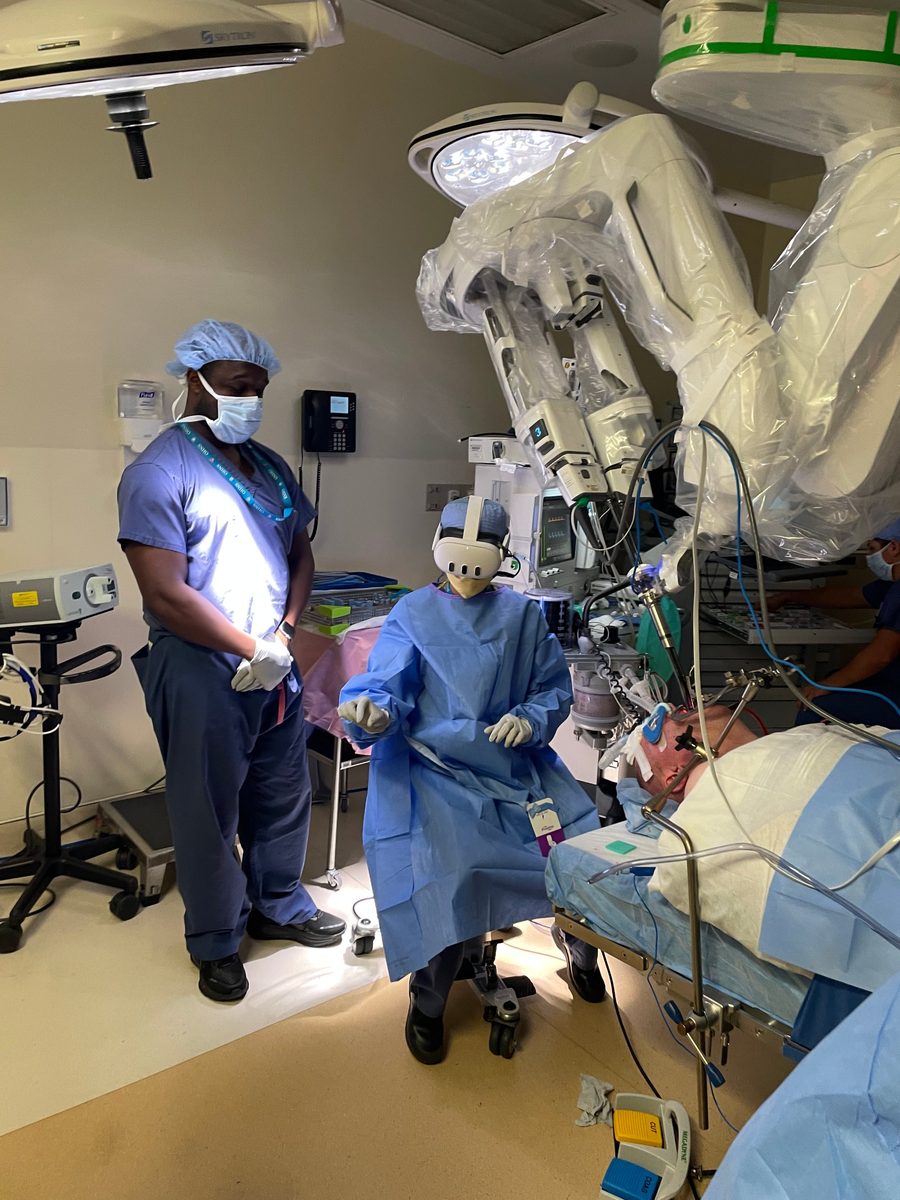
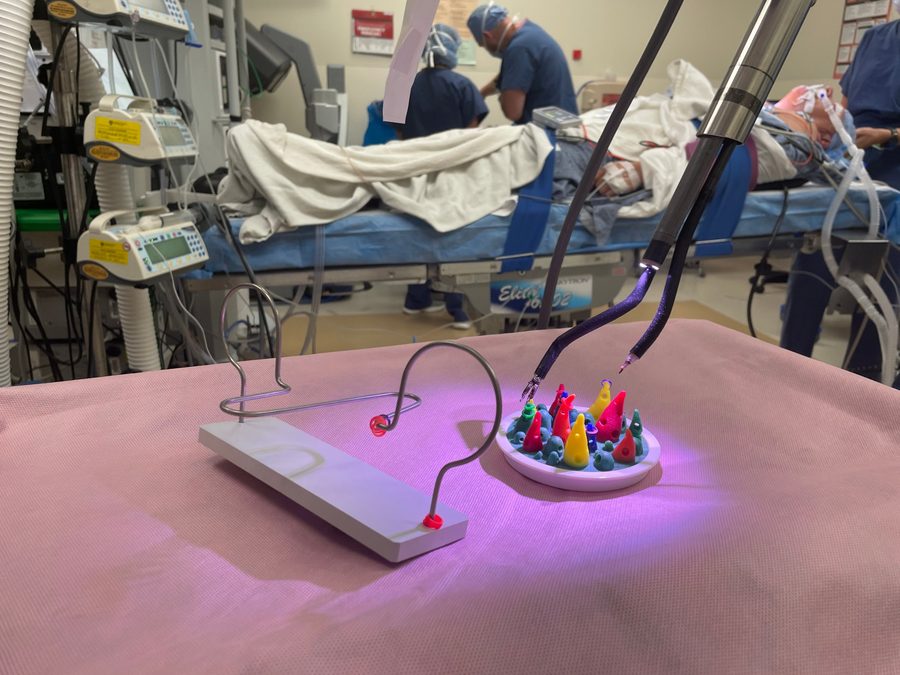
Transoral robotic surgery and treatment de-escalation
Dr. Richmon established the TORS program at Johns Hopkins in 2009 and built it into the third-highest-accruing site nationally for ECOG 3311, the landmark cooperative-group trial of transoral surgery followed by reduced-dose radiation for HPV-related throat cancer. His work covers program implementation, operative technique, swallowing outcomes, rapid discharge after surgery, and the next generation of single-port robotic surgery.
Selected publications
- Long-term follow-up of E3311: transoral surgery and risk-based adjuvant treatment in HPV-initiated oropharynx cancer J Clin Oncol, 2025
- Swallowing function and perioperative complications after transoral robotic surgery JAMA Otolaryngol Head Neck Surg
- Feasibility of rapid discharge after transoral robotic surgery of the oropharynx Laryngoscope, 2014
Microvascular reconstruction
Dr. Richmon has led multi-institutional studies through the American Head and Neck Society that set standards of care for free flap reconstruction, including flap repair after salvage laryngectomy and long-term function after total glossectomy, along with studies of donor-site recovery and enhanced recovery after surgery.
Selected publications
- Impact of pharyngeal closure technique on fistula after salvage laryngectomy JAMA Otolaryngol Head Neck Surg, 2013
- Long-term functional outcomes of total glossectomy with or without total laryngectomy JAMA Otolaryngol Head Neck Surg, 2015
- Early weight-bearing after fibula free flap surgery JAMA Otolaryngol Head Neck Surg, 2024
Scarless thyroid and neck surgery
At Johns Hopkins, Dr. Richmon developed transoral robotic thyroidectomy through cadaver feasibility studies, contributing to the foundational description of the vestibular approach that is now used worldwide, and in 2016 he performed the first transoral thyroid surgery in the United States. He continues to refine remote-access approaches that hide or avoid a neck scar.
Selected publications
- Transoral robotic-assisted thyroidectomy: a preclinical feasibility study in 2 cadavers Head Neck, 2011
- Lateral vestibular approach to the central neck for thyroid and parathyroid surgery: a cadaveric study J Laparoendosc Adv Surg Tech A, 2021
HPV liquid biopsy
Together with Dr. Daniel Faden, who leads the science, Dr. Richmon supports a translational research program in circulating tumor HPV DNA: a blood test that may detect HPV-associated cancers earlier, confirm that surgery removed all the cancer, and watch for recurrence. His role is building the clinical program, the patient volume, and the operative infrastructure that make this research possible.
Selected publications
- Circulating tumor HPV DNA whole genome sequencing enables HPV-associated oropharynx cancer early detection J Natl Cancer Inst, 2026
- Whole genome HPV liquid biopsy for HPV-associated cancer detection and viral physical state classification Clin Cancer Res, 2026
- Circulating tumor HPV DNA in patients with stage I and II HPV-associated head and neck cancer after surgery JAMA Otolaryngol Head Neck Surg, 2024
Surgical technology and training
Working with engineers at Johns Hopkins, Dr. Richmon helped develop the Robo-ELF robotic laryngoscope (patented) and image-guided TORS, and he contributed to the robotic microsurgery system that became Galen Robotics. He co-developed the first competency-based TORS training curriculum, senior-authored the national consensus statement on TORS training and credentialing, and in 2022 co-founded the Otolaryngology Technology and Innovation Collaborative at Mass Eye and Ear.
Selected publications
- Training, credentialing, and maintenance of certification for transoral robotic surgery: national consensus statement Head Neck, 2016
- Robotic endolaryngeal flexible (Robo-ELF) scope: a preclinical feasibility study Laryngoscope, 2011
- Objective assessment in residency-based training for transoral robotic surgery Laryngoscope, 2012
Fluorescence-guided surgery
Fluorescent agents make tumors and critical structures glow under special light during surgery. Dr. Richmon published early experience with indocyanine green (ICG) fluorescence-guided TORS on the single-port robot, and he is site principal investigator for a Phase 3 multi-institutional trial of ALM-488, a fluorescent agent that lights up nerves so they can be identified and protected during head and neck surgery.
Selected publications
Education and the Head and Neck Surgery Fellowship
Dr. Richmon is Director of the Head and Neck Surgery Fellowship at Mass Eye and Ear and Harvard Medical School, which trains the next generation of head and neck cancer surgeons. Fellows spend a year operating, seeing patients, and doing research alongside the faculty after completing their otolaryngology residency. He served as co-director of the fellowship from 2016 to 2022, became director in 2022, and chairs the Mass Eye and Ear fellowship committee. Before coming to Boston, he directed the Head and Neck Surgery Fellowship at Johns Hopkins from 2013 to 2016.
His former fellows now practice across the country. Seven lead head and neck oncology programs at their institutions, and two have become chairs of their departments of otolaryngology–head and neck surgery.
His teaching reaches beyond Mass Eye and Ear. From 2018 to 2023 he co-directed the American Head and Neck Society’s TORS Fellows Training Curriculum, the first formal national program in robotic head and neck surgery, which trained about 30 to 40 fellows each year. He also teaches at national microvascular dissection courses for fellows, and he has received faculty teaching awards at both institutions: the George T. Nager, MD Faculty Teaching Award at Johns Hopkins (2010) and the Montgomery Excellence in Teaching Award from the Harvard combined otolaryngology residency (2021).
The fellowship is largely supported by philanthropy. Gifts from grateful patients and friends of Mass Eye and Ear make it possible to train these surgeons, who go on to care for thousands of patients over their careers.
Clinical trials
Many of Dr. Richmon’s patients take part in clinical trials through the Mike Toth Head and Neck Cancer Research Center. He is currently site principal investigator for a Phase 3 trial of ALM-488 for seeing nerves during head and neck surgery. If you are interested in a trial, ask at your consultation.
Support research and fellowship training
With your support, Mass Eye and Ear physicians, scientists, and caregivers are transforming lives through expert specialty care, world-leading research, and training for the next generation of leaders in their fields. Together, we can push the bounds of discovery to bring new treatments and cures to the millions of people who need them.
Gifts can be directed to Dr. Richmon’s research or to the Head and Neck Surgery Fellowship.
Give to Mass Eye and EarTo discuss a gift for Dr. Richmon’s research or the fellowship
Dana Grider, CFRE
Assistant Vice President, Philanthropic Relations
Mass Eye and Ear
Mass General Brigham Development Office