“Scarless” robotic thyroidectomy
Thyroid nodules are very common and are frequently recommended for surgical removal. Recognizing that the scar from thyroid surgery can be distressing for many patients, Dr. Richmon has sought alternative techniques.
Over the last two decades, Dr. Richmon has become a pioneer in “remote-access” thyroid surgery and is recognized as an international expert in the field. He was the first surgeon in the United States to perform transoral robotic thyroid surgery and started the robotic thyroid surgery programs at Johns Hopkins and at Mass Eye and Ear.
Who it suits
- Thyroid nodules or small thyroid cancers, generally a few centimeters or less
- Patients for whom a visible neck scar is a real concern, including those prone to thick or dark scars
- No previous neck surgery or neck radiation
- No large goiter and no evidence of cancer spreading beyond the thyroid
Not every thyroid problem should be treated this way. Larger tumors, extensive lymph node involvement, and prior neck surgery are reasons to choose a conventional thyroidectomy through a small neck incision, which Dr. Richmon also performs.
What to expect
Dr. Richmon's preferred approach now is an incision in the side of the neck behind the ear, using the robot to remove the thyroid lobe. This incision is usually inconspicuous once healed. The operation is done under general anesthesia and takes longer than a conventional thyroidectomy because of the approach. The risks that apply to any thyroid operation, injury to the nerve that controls the vocal cord and low calcium from the parathyroid glands, are the same and are discussed at the consultation.
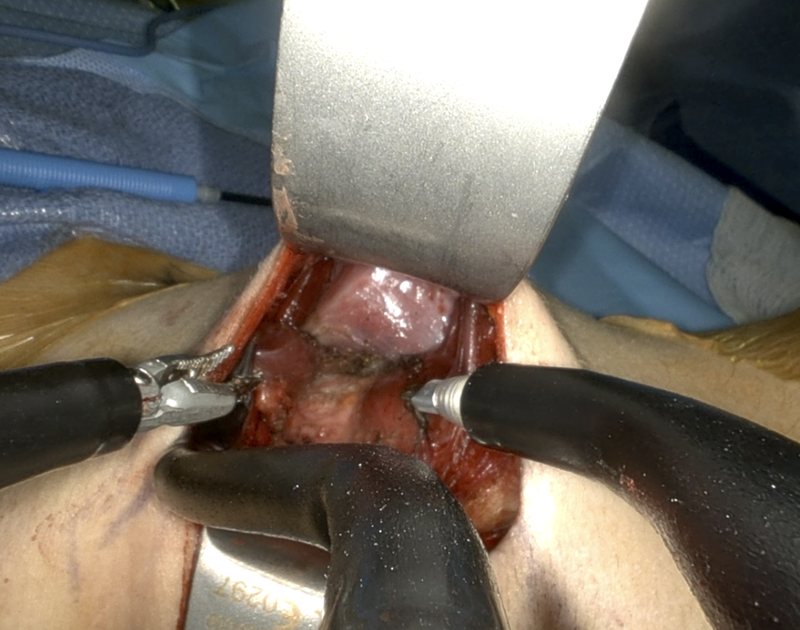
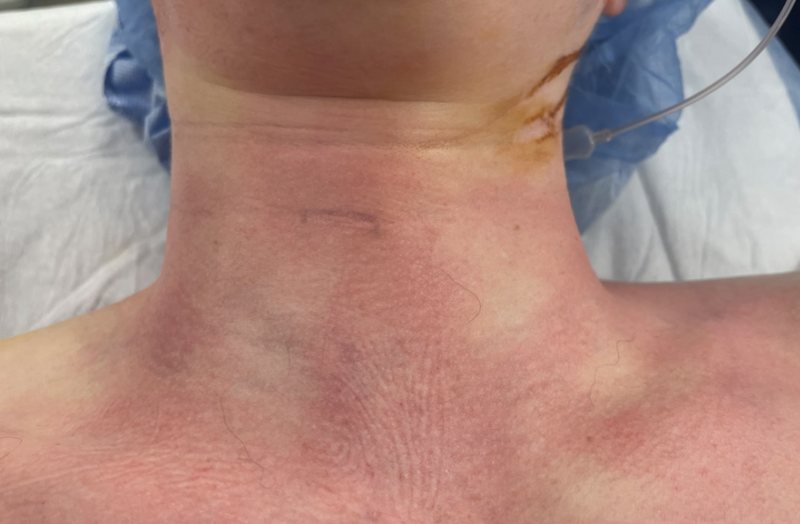
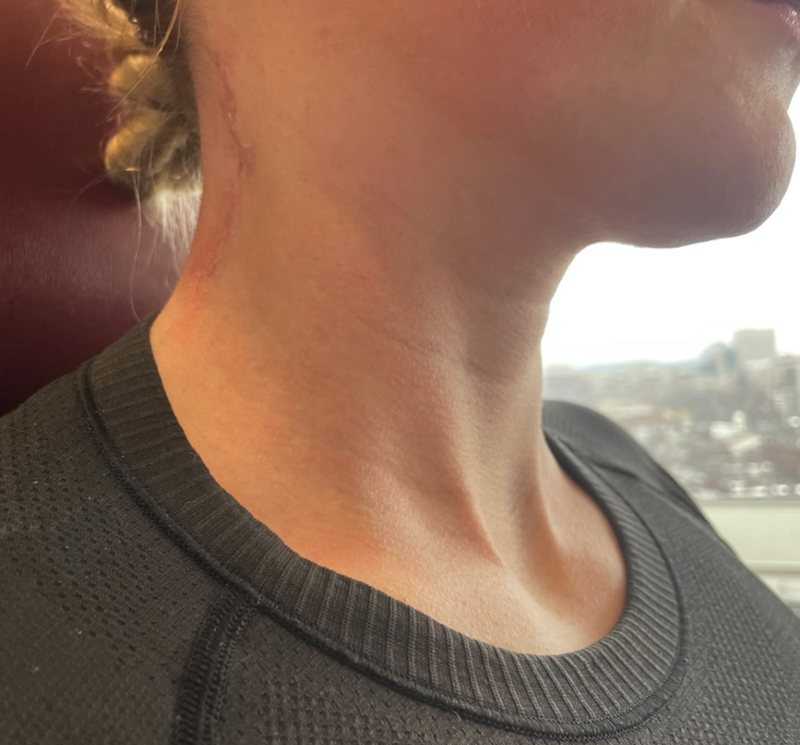
Photos shared with patient permission. The first is an operating-room image.
Other minimally invasive head and neck surgery
This approach can also be applied to other tumors of the neck where a visible scar is to be avoided. Dr. Richmon's videos of “scarless” thyroid and related surgery are on Vimeo.
Ask whether scarless thyroid surgery is an option for you
617-573-3669Mass Eye and Ear Head and Neck Cancer Program
Boston, MA 02114 Request an appointment through Mass General Brigham