HPV-related throat cancer
Most cancers of the tonsil and base of tongue diagnosed in the United States today are caused by the human papillomavirus (HPV). They behave differently from the throat cancers of heavy smokers and drinkers, and they respond well to treatment. The medical name is oropharyngeal cancer (HPV-associated squamous cell cancer of the oropharynx).
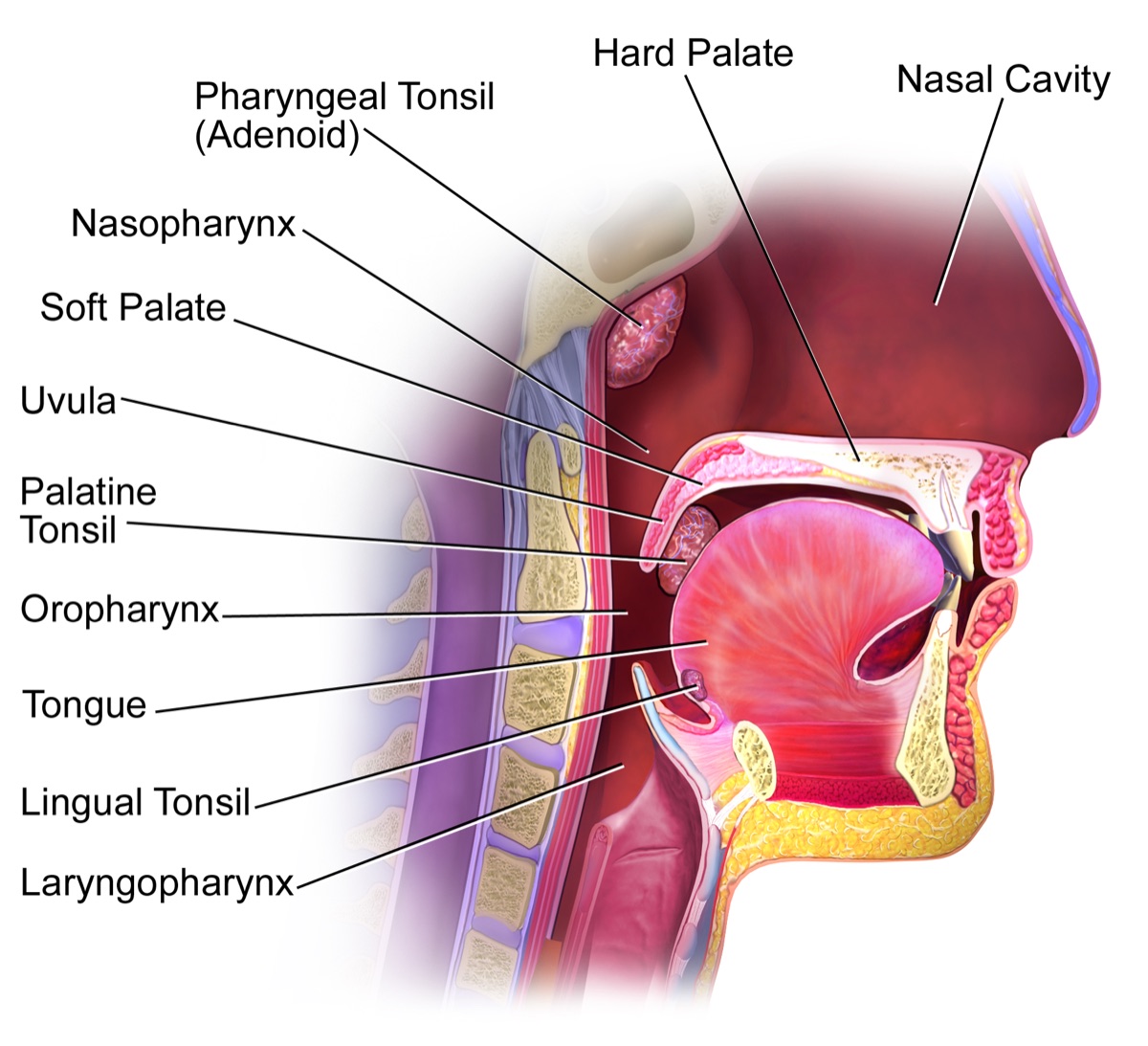

Symptoms to take seriously
The first sign is often not in the throat at all.
- A painless lump in the neck that does not go away in two to three weeks. This is the most common first symptom, and it is often mistaken for an infection.
- A sore throat that lasts more than a few weeks
- Ear pain on one side with a normal ear exam
- Difficulty or pain with swallowing
- One tonsil that is larger than the other
- A change in voice or a feeling of something stuck in the throat
Most patients do not have any risk factors. HPV-related throat cancer is most often found in men between 50 and 70, many of whom have never smoked. A person who had HPV decades ago can develop it; the infection usually causes no symptoms at the time, and the patient does not have an active HPV infection and cannot transmit it to others.
How it is diagnosed
A head and neck surgeon examines the throat with a thin flexible scope through the nose, which takes a minute in the office. A needle biopsy of a neck lump, done with ultrasound guidance, usually confirms the diagnosis and is tested for HPV (reported as p16). CT or PET scans show the size of the tumor and the lymph nodes. Sometimes a brief exam under anesthesia is needed to see the tumor fully and take biopsies.
Treatment options
Early-stage HPV-related throat cancer has more than one good treatment, which is why a multidisciplinary evaluation is critical before treatment. This involves a visit with a surgeon, a radiation oncologist, and a medical oncologist who all specialize in head and neck cancer.
Surgery first
TORS to remove the tumor through the mouth, with a neck dissection. The pathology then determines whether radiation is needed. Some patients need no further treatment; others receive a reduced dose of radiation; those with high-risk features receive radiation with chemotherapy.
Radiation with chemotherapy
Daily radiation over six to seven weeks, usually with chemotherapy. This is the standard for advanced tumors and a reasonable alternative for early ones. It avoids an operation but has its own long-term effects on swallowing and saliva.
Reduced-intensity treatment
Because HPV-related cancers respond so well, clinical trials are testing whether treatment can be safely reduced to limit long-term side effects. Ask whether a trial is open for your stage. Trials have specific entry criteria and timing, so raise the question early.
Mass Eye and Ear / Mass General Brigham Head and Neck Cancer Center
Mass Eye and Ear is one of the highest-volume head and neck cancer centers in the country, with a long history of innovation, expertise, and excellence in caring for patients with this challenging disease. It is currently one of the highest-volume TORS programs in the country, blending cutting-edge clinical and research programs so that patients receive the best care possible while driving innovation for the future.
We work closely with the Mike Toth Head and Neck Cancer Research Center, and many of our patients are enrolled in clinical trials. Together with Dr. Daniel Faden, a world-renowned expert in liquid biopsy techniques for HPV-positive cancers, we are paving the path forward to optimize long-term survival, function, and quality of life for our cancer survivors.
Getting a second opinion
A second opinion is a normal part of cancer care, and there is time for one. Treatment decisions for early throat cancer are rarely so urgent that a week or two of review changes the outcome. To make the visit useful, arrange for the pathology report, the biopsy slides if requested, and your scans to be available before the appointment. A repeat biopsy is usually not needed.
Dr. Richmon sees patients for second opinions on throat cancer at the Mass Eye and Ear Head and Neck Cancer Program and through Atrius Health. The Mass General tumor board, which includes surgeons, radiation oncologists, medical oncologists, radiologists, and pathologists, reviews new cases weekly.
Boston, MA 02114 Request an appointment through Mass General Brigham